

Nostalgia in marketing: 3 cases that prove why emotional familiarity sells
In May 2022, a sequel to a 1986 action film earned $1.493 billion at the worldwide box office — making it the highest-grossing film of Tom Cruise’s career and one of the most commercially successful movies of the decade. Top Gun: Maverick did not succeed despite being a sequel. It succeeded, in large part, because of it.
The same year, My Chemical Romance finished a world tour that sold out in minutes. Blink-182 reunited with their original lineup, released their most emotionally direct album, and played the most attended tour of their history. Every December, Spotify releases a feature called Wrapped that shows listeners a recap of what they played over the past twelve months; in 2023, 226 million users in 113 countries engaged with it, and it trended on social media across dozens of markets simultaneously.*1
This is a pattern that researchers have been documenting for decades, and that marketers are now using more deliberately than at any point in recent memory: nostalgia, when applied strategically, is one of the most reliable paths to genuine emotional engagement with an audience.
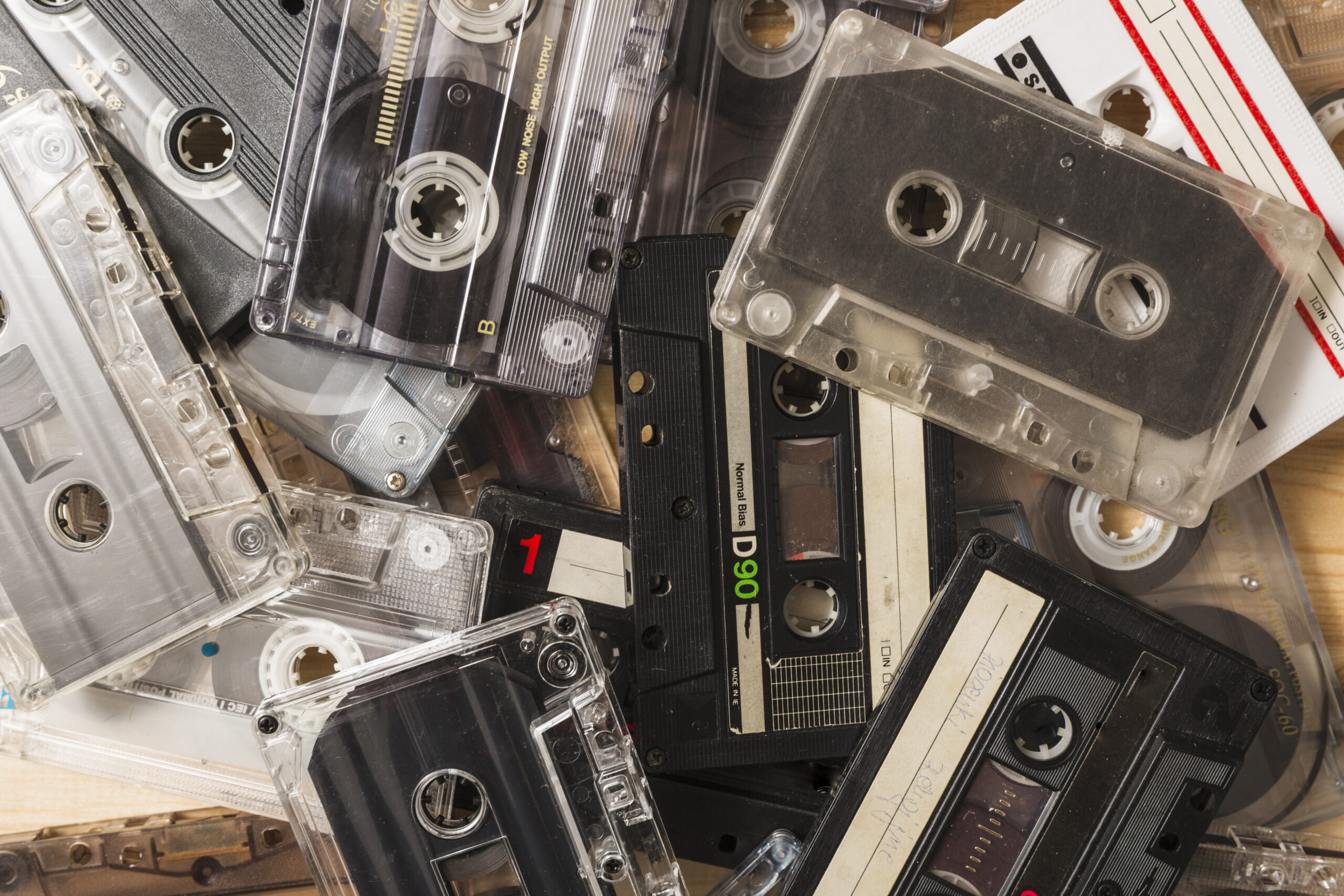
What nostalgia does in the brain
The academic study of nostalgia changed significantly in 2006, when Constantine Sedikides and Tim Wildschut at the University of Southampton published what became a foundational paper in the field. Their central finding: nostalgia is not primarily an emotion about the past. It is a social emotion. Nostalgic experiences are predominantly centered on other people — on belonging, connection, and the continuity of who we are over time.*2
Subsequent research by the same group found that nostalgia counteracts loneliness, increases a sense of social connectedness, and raises self-esteem. It functions as a psychological resource — something people draw on when they feel isolated, bored, or uncertain about their identity or direction. This is not trivial for marketing. When a brand successfully triggers nostalgia, it is not just reminding someone of the past. It is giving them something they were looking for: belonging, continuity, and a connection that feels real rather than constructed.
The trust dimension is closely related. Familiarity generates trust — this is one of the most consistent findings in social psychology. A brand that speaks in the cultural language of its audience, that references the same music, films, moments, and textures of experience, is demonstrating that it belongs to the same world. And belonging produces trust faster than any testimonial or credential.
Three cases that show how this plays out at scale
Spotify Wrapped
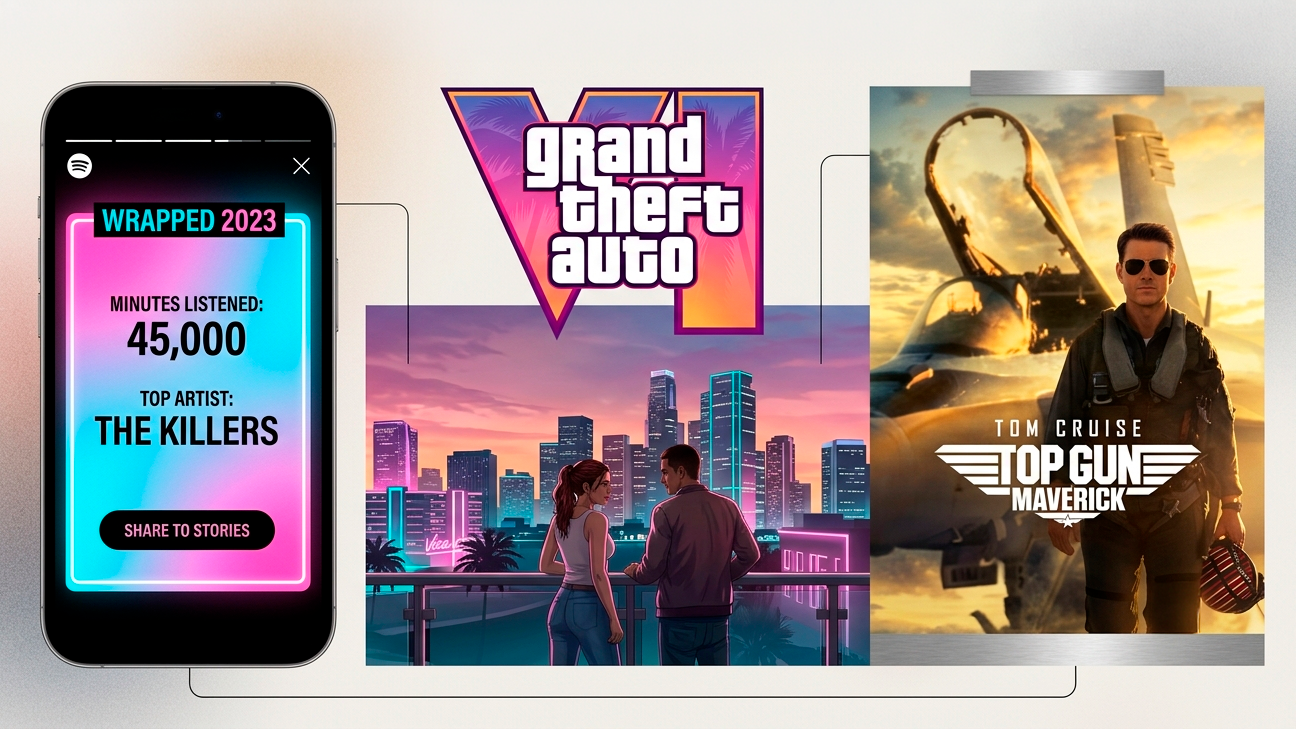
Spotify Wrapped is one of the most shared annual digital events in the world — and it is built entirely around retrospection. Users receive a visual summary of their listening year: most-played artists, total minutes, decade of their top songs. None of this is new information; people lived it. What Wrapped does is give that experience a frame, a shareable format, and a mirror. The result functions less like a product feature and more like a shared ritual — millions of people simultaneously reflecting on who they were over the past twelve months and sharing that reflection publicly. Spotify is not advertising during Wrapped. It is participating in a moment of identity.
GTA VI — The Announcement Before the Experience
In December 2023, Rockstar Games released a single trailer for Grand Theft Auto VI. It contained no complete gameplay footage. What the trailer offered was atmosphere, character, and a sense of return to a world millions of people had spent years inside of. In its first 24 hours on YouTube, it accumulated approximately 93 million views — the most-watched video game trailer in the platform’s history within that window. Pre-order demand surged within hours, with waitlists appearing across retail platforms before a release date had even been officially confirmed. The audience that built genuine attachment to that game is now approaching thirty or well past it. They have jobs, responsibilities, and a version of themselves they carry in memory. What Rockstar understood was that the announcement of GTA VI was not asking that audience to try something unfamiliar. It was offering them a reason to feel something they recognized.
Top Gun: Maverick
Paramount made a film that was explicitly a conversation between the present and the past — where the protagonist’s relationship with time, legacy, and purpose was the central dramatic engine. Viewers who were teenagers when they saw the original in 1986 were now in their fifties. The film gave them something to share with their children and something to revisit with themselves. It performed across generations because nostalgia radiates outward.*3
Three ways this principle applies to any business with an audience
01
Nostalgia is about your audience, not your product.
A service business does not need a long history to use nostalgia strategically. The references that create connection are the ones the audience already carries — the music from when they started their business, the cultural moments that defined the decade they built their careers in, the shared textures of a generation. A post that opens with a reference to a song or a film from 2003 and builds toward something relevant is not tangential. It is the beginning of a relationship. The product or service comes later, in a context that is already warm.
02
Retrospectives give people a reason to stop scrolling.
Spotify Wrapped works because it stops the year and hands people a mirror. Businesses can do this at any scale — a year-end recap of projects completed, a “this time last year” post, a reflection on how a market or trade has shifted over a decade. Retrospective content does something that forward-looking content does not: it creates a sense of shared journey. The audience is not receiving information about your business. They are being invited to recognize themselves in the story of how you got here.
03
People follow content that makes them feel something.
The brands with genuine followings on social media are almost never the ones posting the most information about their services. They are the ones posting content that earns an emotional response — recognition, laughter, memory, pride. Nostalgia is one powerful mechanism for this, but it belongs to a broader category: content that speaks to who the audience is, rather than what the business sells. For a service business, this is the shift from broadcasting to belonging — from updating followers about your work to becoming a voice they actually want to hear.
This is what the most commercially successful nostalgic campaigns have in common: they did not sell with nostalgia. They created connection with it, and let the relationship do the selling. The Spotify user who shares their Wrapped is not advertising for Spotify. They are telling their own story — and Spotify happened to give them the frame. The person who bought a Maverick ticket in 2022 did not buy a Tom Cruise film. They bought a conversation with their past self.
For a business of any size, the operative question is the same one Spotify asks every December: do you know your audience well enough to show them something they already care about?
WHO IS VOLP AGENCY?
The most effective content for a service business is rarely about the service. It is about the person who uses it — their world, their references, their sense of identity. Volp Agency builds content strategies grounded in audience research: understanding who your clients are, what they care about, and what kind of content earns their attention before it ever asks for a sale. If your business is ready to build an audience that actually engages, we would like to be part of that conversation.
Sources
*1 Spotify, Wrapped 2023. 226 million listeners received personalized Wrapped summaries across 113 countries. The feature originated as “Year in Music” in 2013 and was rebranded as Wrapped in 2016.
*2 Wildschut, T., Sedikides, C., Arndt, J., & Routledge, C. (2006). “Nostalgia: Content, Triggers, Functions.” Journal of Personality and Social Psychology, 91(5), 975–993. Foundational paper establishing nostalgia as primarily a social emotion; nostalgic memories predominantly centered on belonging and connection with others rather than solitary experience.
*3 Top Gun: Maverick (2022), dir. Joseph Kosinski. Worldwide box office: $1.493 billion (Box Office Mojo). Highest-grossing film of Tom Cruise’s career. Released 36 years after the original Top Gun (1986, dir. Tony Scott).