

Microcommunity marketing: 3 reasons why brands that stop talking about themselves win more customers
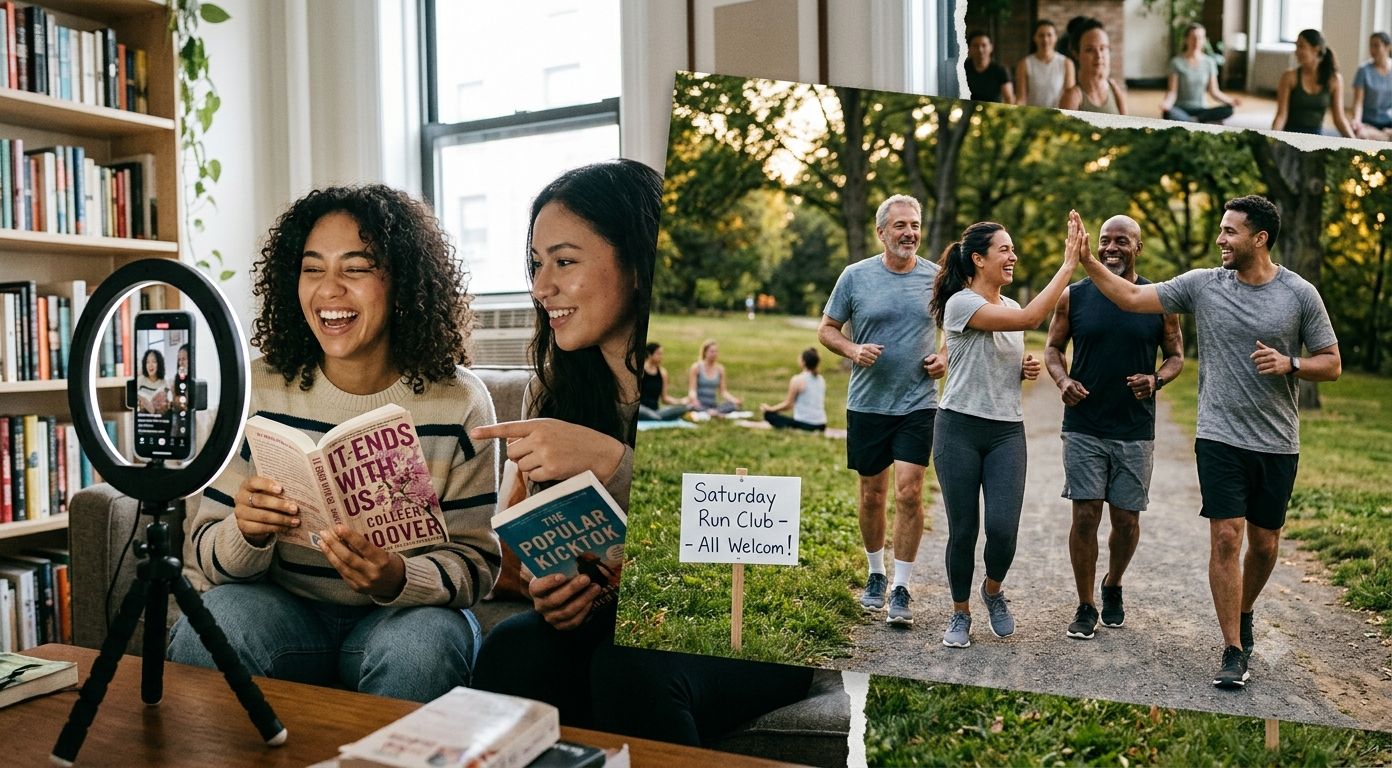
The post went up at 9am on a Tuesday. A product shot, a caption about quality and reliability, a call to action. By end of day it had six likes — three of them from employees. The brand kept posting, the audience kept scrolling.
Nobody asked why it was not working, because everyone quietly knew: the content was built for the brand, not for the people who were supposed to see it.
Institutional content, self-referential brand messaging, and explicit sales language are not just underperforming. They are actively training audiences to disengage. People have developed a practiced indifference to brand communication that follows the old template. They scroll past it the way they skip an ad they have seen thirty times.
Meanwhile, entirely different conversations are happening — in communities built around shared interests, identities, and lifestyles — and those conversations are moving markets, creating demand, and building the kind of brand loyalty that no ad spend can replicate. The brands that have learned to participate in those conversations, rather than interrupt them, are the ones showing up in their customers’ daily lives in a way that sticks.
Microcommunities are not a niche phenomenon. They are all about behavior.
A microcommunity is a group of people organized around a shared identity — a practice, an interest, a lifestyle — who communicate, influence each other, and move together in ways that traditional demographic targeting cannot predict or replicate. They do not wait for brands to tell them what matters. They tell each other. And what they tell each other shapes what they buy, what they trust, and which brands they feel belong in their world.
The global wellness economy reached $5.6 trillion in 2022, according to the Global Wellness Institute — and a significant portion of that growth was not driven by traditional advertising.*1 It was driven by communities of runners, cyclists, beach tennis players, gym regulars, and health-conscious consumers who shared their routines, recommended products, and built social identities around their lifestyle choices. The SFIA reported 36.5 million pickleball players in the United States in 2023 — a sport that barely existed in mainstream culture five years earlier.*2 That growth did not come from a pickleball marketing campaign. It came from community spreading to community, person to person.
These communities are not waiting to be marketed to. They are already in conversation. The only question for any brand is whether it has a reason to be part of that conversation — and whether it knows how to show up without announcing itself like an intruder.
BookTok and what it did to an entire industry
A clearest recent case study in microcommunity behavior reshaping an entire market is BookTok — the book-focused subcommunity of TikTok that has, since 2020, accumulated over 200 billion views under the hashtag and fundamentally altered the publishing industry’s acquisition, marketing, and distribution strategies.*3
In 2022, author Colleen Hoover sold 8.6 million copies of her books in the United States alone — a figure reported by NPD BookScan that placed her among the bestselling authors in the country for that year.*4 She did not achieve this through a traditional publisher campaign. She achieved it because BookTok readers created videos about her work, recommended her titles to their followers, and built a community of readers who trusted each other’s recommendations more than any advertisement. Titles that spent years in relative obscurity appeared on bestseller lists for the first time. Independent bookstores dedicated entire sections to “BookTok picks.” Amazon and Barnes & Noble reorganized their recommendation interfaces around what the community was reading.
The streaming industry paid attention. Amazon Prime adapted Taylor Jenkins Reid’s novel Daisy Jones & The Six into a series in 2023, a book that had developed a devoted following on BookTok before any adaptation was announced. Amazon’s The Summer I Turned Pretty (2022) and Sally Rooney’s Normal People on Hulu followed the same arc. Sony Pictures’ 2024 film adaptation of It Ends With Us confirmed the pattern at the theatrical level. But the clearest signal that streaming platforms had internalized BookTok as a strategic acquisition tool came in 2026: Elle Kennedy’s Off Campus series premiered on Amazon Prime Video in early 2026 and became a global phenomenon, holding the number one spot across multiple markets for weeks — driven by a readership that had built its enthusiasm years earlier on TikTok.*5 Fourth Wing, Rebecca Yarros’s fantasy romance that broke BookTok in 2023, is currently in development at Amazon with Michael B. Jordan producing and Lisa Joy attached as showrunner.*6 Wild Love and Elsie Silver’s Chestnut Springs series, both BookTok sensations before any studio showed interest, are in production at Amazon Prime and Netflix respectively.*7
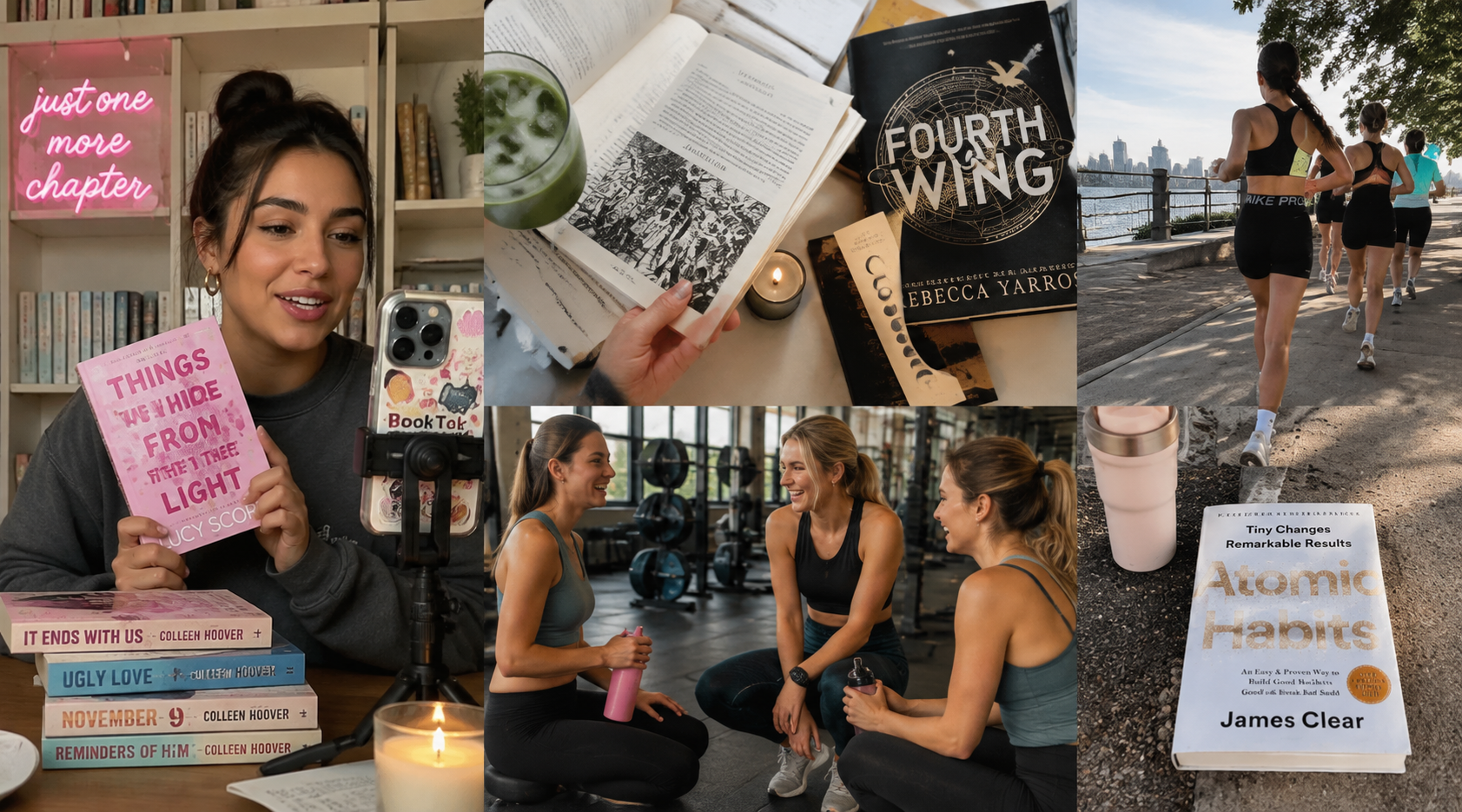
Three things this changes for any brand that wants to stay relevant
01
Institutional content does not build relationships
Consumer fatigue with branded content is not a trend. It is a structural shift. People spend their attention on things that serve them — entertainment, information, identity, belonging — and institutional messaging serves the brand, not the reader. A post about your company’s values or a caption listing your services asks the audience to care about something they have no reason to care about yet. The brands gaining real traction inside communities are contributing something before they ask for anything: content that entertains, informs, or reflects back something the community already cares about.
02
Awareness built inside a community compounds differently than awareness bought outside it
A paid impression reaches someone once. A brand that participates genuinely in the daily conversation of a community gets remembered, referenced, and shared by people who didn’t see the original post. The mechanics of community-based awareness are closer to word-of-mouth than advertising: each touchpoint builds on the last, and trust is transferred peer to peer rather than broadcast from brand to stranger. This is precisely what happened to every title that went viral on BookTok — the community did the distribution. Brands that earn a place inside a community’s conversation benefit from the same multiplier.
03
Your ideal client is not a demographic. They are a person with routines, interests, and communities they belong to.
The person who hires your business also runs on Saturday mornings, plays pickleball on weeknights, or checks a football app before they check their email. They do not want to follow your brand for updates about your services. But if your content appears in a context that feels relevant to who they are — not just what they might buy — you earn a place in their attention. And attention, over time, becomes memory. Memory becomes the first call they make when they need what you offer.
The brands that disappear are not always the ones that do something wrong. Many of them are just doing what worked ten years ago — consistently, professionally, sincerely — in an environment that has fundamentally changed around them. The audience moved, gathered into communities that operate on different signals, and started ignoring the channels where the old conversation was happening.
The shift required is a change in orientation: from broadcasting at an audience to being present within one. The brands doing this well are not sacrificing their identity. They are extending it into spaces where real people spend their real attention — and they are showing up there as participants, not sponsors.
Check out our recommended podcasts on this topic.
WHO IS VOLP AGENCY?
Volp Agency is a team of specialists in copywriting, design, paid traffic, and audiovisual production. We start by understanding your ICP not as a target demographic but as individuals with routines, interests, and communities they belong to. From there, we build content that enters their world on their terms — keeping your brand present and relevant in the daily conversation of the people most likely to hire you, long before they need to make a decision.
Sources
*1 Global Wellness Institute, Global Wellness Economy Monitor, 2023. Global wellness economy: $5.6 trillion in 2022; projected growth to $8.5 trillion by 2027.
*2 Sports & Fitness Industry Association (SFIA), 2023 Topline Participation Report. 36.5 million pickleball players in the United States in 2023.
*3 #BookTok: over 200 billion cumulative views on TikTok as of 2024. Widely reported by Publishers Weekly, The New York Times, and The Guardian, 2022–2024. Credited with reshaping publishing industry acquisition strategies and bookseller merchandising globally.
*4 NPD BookScan 2022 Annual Report, as reported by Publishers Weekly and The New York Times. Colleen Hoover sold 8.6 million copies in the United States in 2022, driven primarily by organic BookTok community engagement.
*5 Off Campus (Elle Kennedy), Amazon Prime Video, 2026. Global #1 streaming series upon release, holding the top position across multiple markets for consecutive weeks. Source: The Guardian (May 29, 2026), TV Guide, and The Atlantic (June 2026). The series was preceded by years of reader enthusiasm driven entirely by BookTok community engagement.
*6 Fourth Wing (Rebecca Yarros), in development at Amazon. Michael B. Jordan attached as producer; Lisa Joy (co-creator of Westworld) attached as showrunner. Source: Deadline, May 2026. The novel launched in May 2023 and became one of the fastest-selling books in BookTok history, driving over 11 million copies sold in its first year.
*7 Wild Love (adapted by Amazon Prime Video) and Chestnut Springs series by Elsie Silver (adapted by Netflix) — both titles generated community-driven demand on BookTok prior to any studio acquisition. Both adaptations reflect the streaming industry’s established pattern of using BookTok engagement as a market signal for content investment.